Efficiency of Digital Contact Tracing During Seasonal Influenza Outbreaks
Jonas Schneider1 , Anna Fischer 2
Keywords:
Digital epidemiology, influenza, outbreak control, surveillanceAbstract
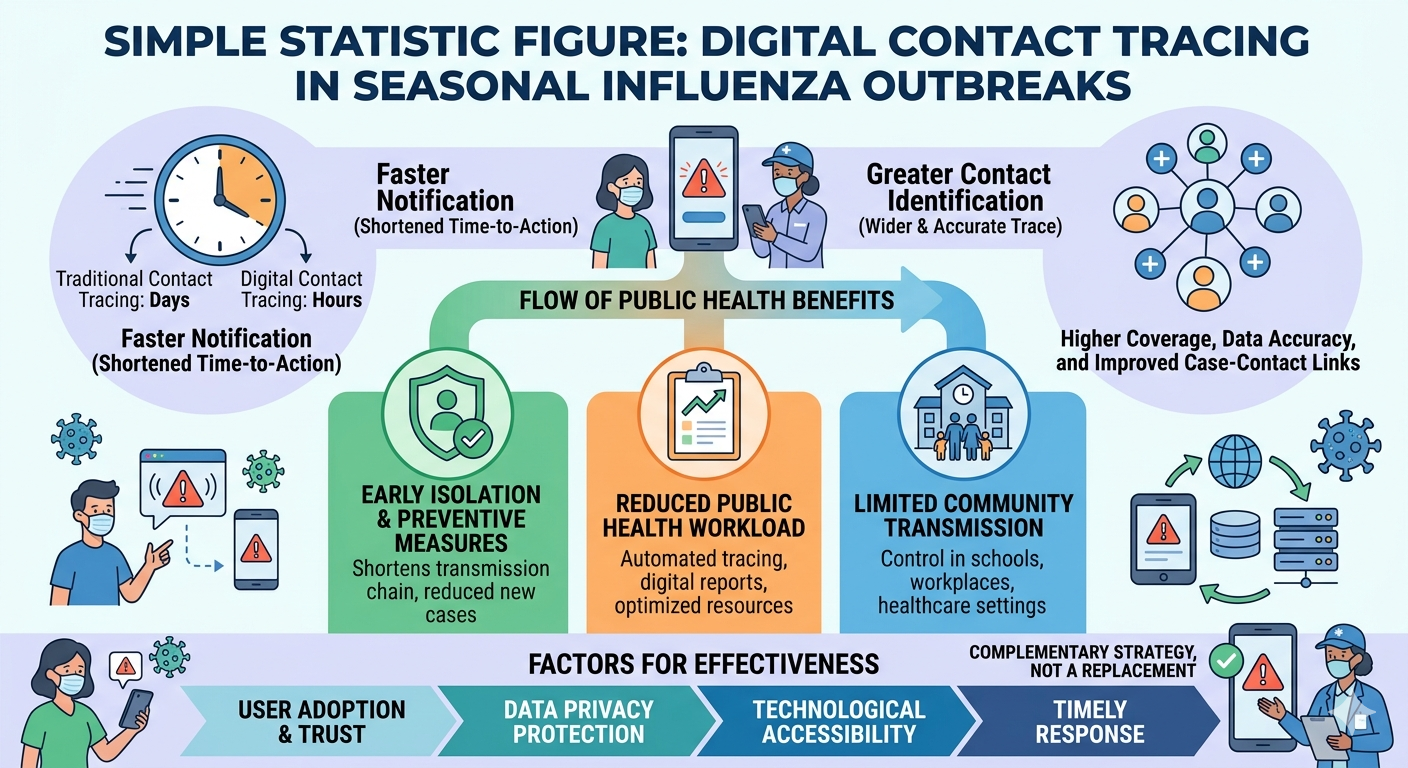
Seasonal influenza remains a recurring public health challenge, causing substantial morbidity, healthcare utilization, absenteeism, and economic burden each year. Rapid identification and follow-up of exposed individuals are essential for limiting transmission, particularly in schools, workplaces, healthcare facilities, and other crowded settings. Digital contact tracing has emerged as a supportive strategy to enhance traditional contact tracing by improving speed, coverage, data accuracy, and real-time monitoring during outbreaks. This study examines the efficiency of digital contact tracing during seasonal influenza outbreaks, focusing on its ability to shorten notification time, improve case-contact identification, support early isolation or preventive measures, and reduce the workload of public health teams. Digital tools, including mobile applications, electronic reporting systems, proximity-based technologies, and integrated surveillance platforms, may strengthen outbreak response when they are well designed, widely adopted, and linked to existing public health systems. However, their effectiveness depends on user participation, data privacy protection, technological accessibility, and timely action after exposure notification. Challenges such as low uptake, incomplete data, digital inequity, and public trust concerns may limit their overall impact. Digital contact tracing should therefore be considered a complementary approach rather than a replacement for conventional public health measures. Strengthening digital infrastructure, community engagement, and ethical data governance may improve preparedness and response to future seasonal influenza outbreaks.
Downloads