
Diabetes Mellitus in Sudan: Epidemiology, Risk Factors, Management Challenges, and Future Priorities
Magda Yousif¹, Suleiman Elgorashi², Amani Ali³, Mohaid EL SARAF⁴*
Keywords:
Diabetes mellitus; Sudan; public health; epidemiology; risk factors; diabetes complications; glycemic control; health-system fragility; conflict-affected healthcare; noncommunicable diseases.Abstract
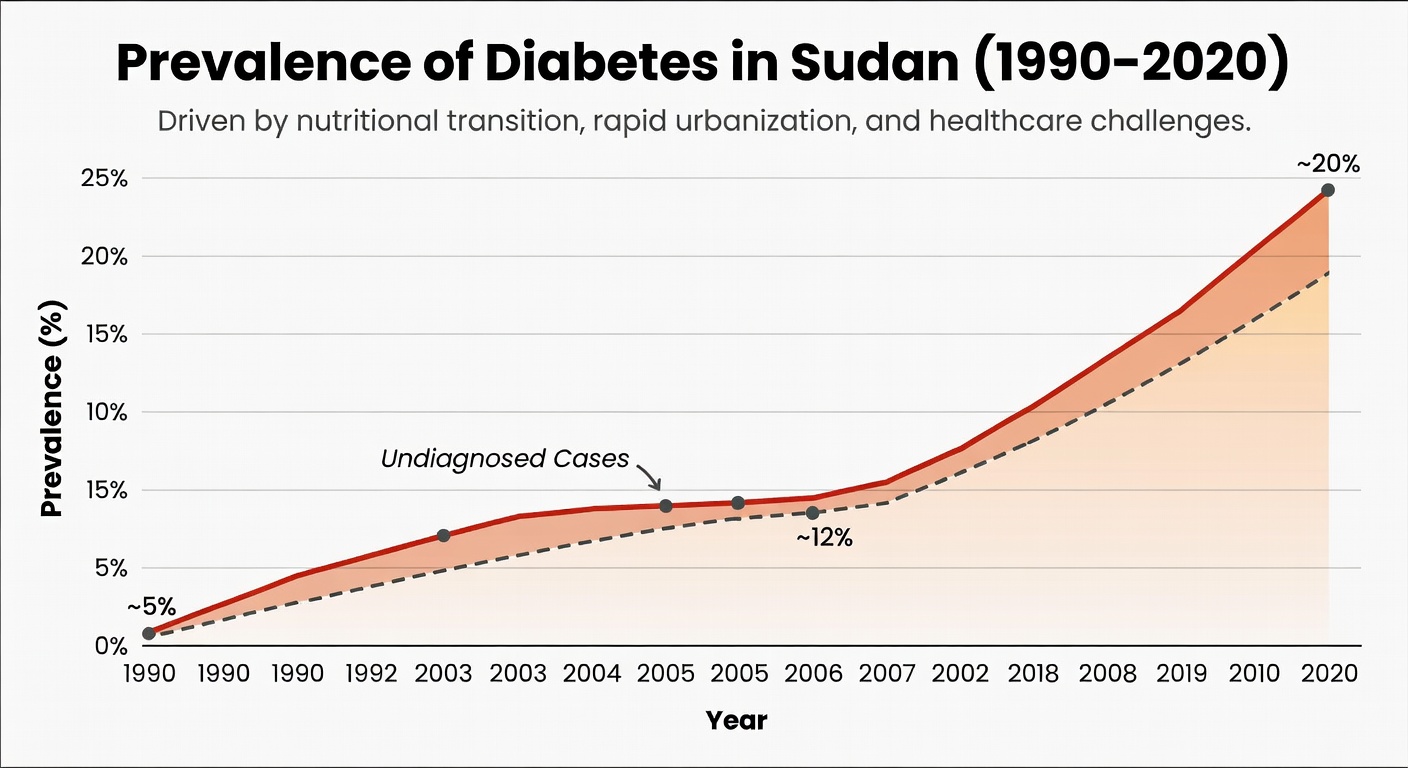
Diabetes mellitus has emerged as a major public health challenge in Sudan, where the burden has risen sharply over the past three decades in parallel with urbanization, demographic change, nutritional transition, and persistent health-system fragility. This narrative review synthesizes available evidence on the epidemiology of diabetes in Sudan, its principal risk factors, complications, barriers to care, current interventions, and future priorities. Early population-based studies in the 1990s documented modest but important levels of diabetes and impaired glucose tolerance, whereas more recent surveys indicate a substantially higher burden, with contemporary estimates suggesting that nearly one in five adults in Sudan is living with diabetes. A large proportion of cases remain undiagnosed, and prediabetes is increasingly recognized among both adults and adolescents. Consistently reported risk factors include older age, family history, central obesity, elevated body mass index, hypertension, urban residence, physical inactivity, and dietary transition. Diabetes-related complications are common and include retinopathy, nephropathy, peripheral neuropathy, and diabetic foot disease, all of which contribute to disability, reduced quality of life, and economic strain. Glycemic control is frequently suboptimal, while medication non-adherence, cost barriers, limited educator capacity, weak screening systems, and unreliable access to medicines and laboratory monitoring continue to undermine care. These challenges have been further intensified by ongoing conflict, which has disrupted health facilities, insulin storage, laboratory access, and continuity of care. Although national guidelines, pediatric mini-clinics, and humanitarian partnerships have strengthened some aspects of diabetes care, major gaps remain. Sudan urgently needs integrated, conflict-sensitive, and equity-oriented strategies that priorities prevention, early detection, continuity of treatment, and resilient diabetes servicesDownloads
Download data is not yet available.
Additional Files
Published
2026-06-02
Issue
Section
Peer Review Policy for Curevance (CVN)


