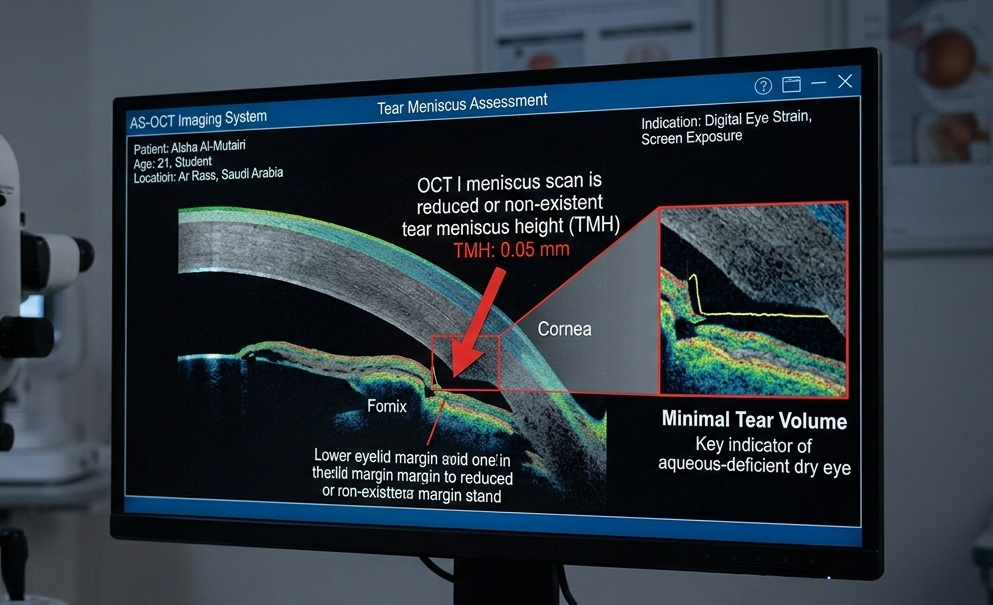
Digital Eye Strain and the Hidden Epidemic of Dry Eye Among University Students
Abla Almalik¹, Asim Ahmed², Luca Moretti³, Elisa Conti⁴
Keywords:
Digital Eye Strain, Dry Eye Disease, Screen Exposure, Ocular Surface, StudentsAbstract
Digital eye strain (DES) has emerged as a major public health concern in the era of intensive screen exposure. This study investigated the association between prolonged digital device use and the prevalence of dry eye disease among university students. A cross-sectional multicenter survey involving 1,312 students aged 18–28 years was conducted across three universities.
Participants completed validated symptom questionnaires including the Ocular Surface Disease Index (OSDI), while clinical assessments included tear breakup time (TBUT), Schirmer test, and corneal staining evaluation. Daily screen exposure was categorized into <4 hours, 4–6 hours, and ≥6 hours.
The prevalence of symptomatic digital eye strain was 46.8%, while clinically diagnosed dry eye disease was present in 32.5% of participants. Students with ≥6 hours of daily screen exposure showed significantly lower TBUT values (5.9 ±2.3 seconds) compared with those using screens <4 hours (8.1 ±2.7 seconds, p<0.001). Meibomian gland dysfunction was detected in 41.2% of high-exposure participants.
Logistic regression analysis demonstrated that prolonged screen use increased the odds of dry eye disease by 2.31 times (95% CI: 1.84–2.89). Female gender, reduced blinking frequency, and air-conditioned environments were also independent predictors of disease.
The findings highlight digital eye strain as a growing environmental and behavioral risk factor for ocular surface disorders. Preventive strategies such as screen-time regulation, blink training, and artificial tear supplementation may significantly reduce the burden of digital eye disease in young populations.
Downloads