
Systematic Review of the Prevalence and Diagnostic Patterns of Diabetic Peripheral Neuropathy in Saudi Arabia,

Sheikh Ahmed¹, Ahmed Almubarak², Aidrous Ali³, Mohammed Elhaj⁴

Authors

Keywords:

diabetic peripheral neuropathy, painful diabetic neuropathy, prevalence, Saudi Arabia, diagnostic methods

Abstract

Doi https://doi.org/10.5281/zenodo.19154860


Background:
Diabetic peripheral neuropathy (DPN), including its painful form (PDPN), is a frequent complication of diabetes associated with foot ulcers, increased amputation risk, and impaired quality of life. Reported prevalence in Saudi Arabia varies considerably, partly due to differences in diagnostic criteria and assessment methods.

Objectives:
To summarize Saudi evidence on the prevalence of DPN and PDPN and to compare the diagnostic case-ascertainment approaches used.

Methods:
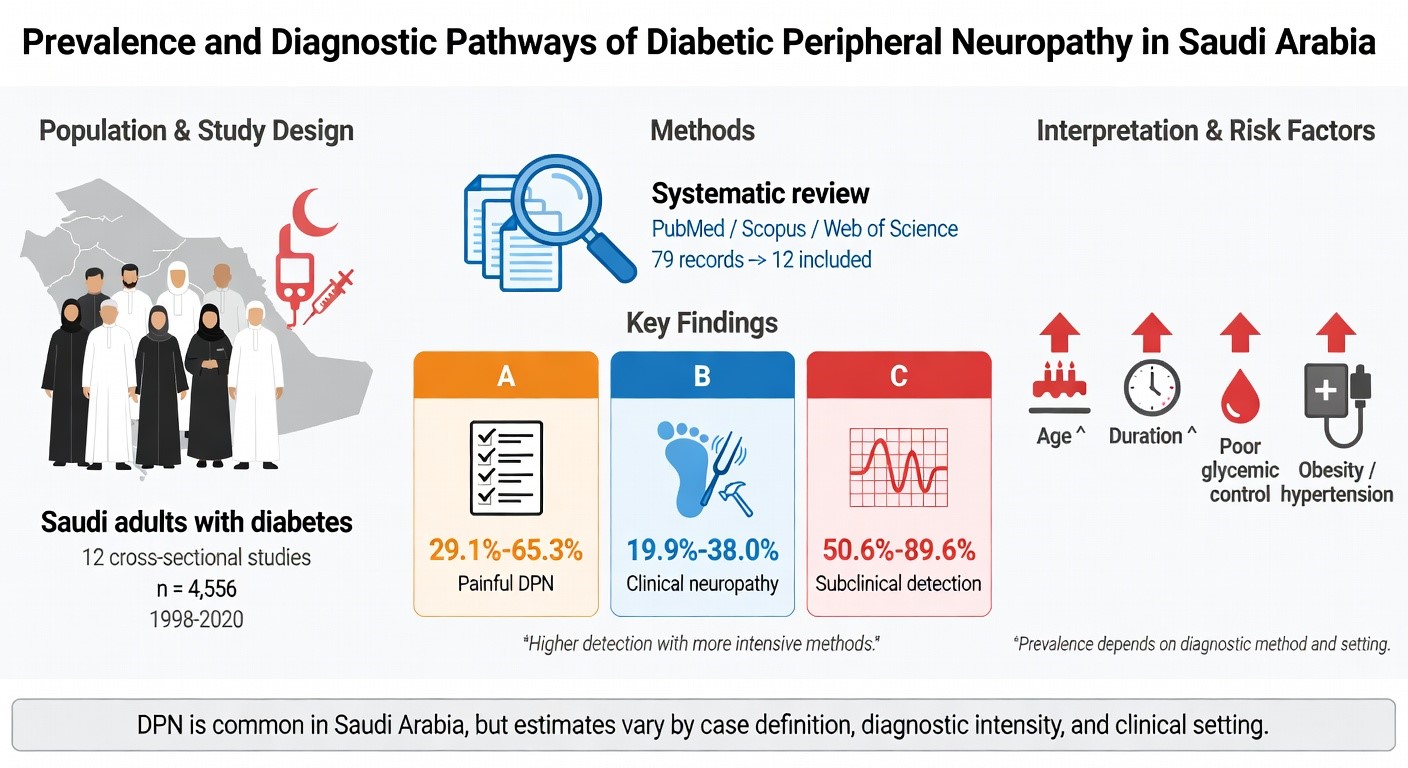
MEDLINE (PubMed), Web of Science, and Scopus were searched from database inception to the final search date, with additional screening of reference lists. Observational studies conducted in Saudi Arabia that included individuals with medically confirmed type 1 or type 2 diabetes were eligible if they reported or allowed calculation of DPN or PDPN prevalence. Records were de-duplicated, screened in two phases, and evaluated at full text. Data extraction covered study setting, sample characteristics, ascertainment category (questionnaire/screening, bedside examination, electrodiagnostic testing, or combined methods), and prevalence outcomes. Findings were synthesized narratively.

Results:
Seventy-nine records were identified, and 12 cross-sectional studies (1998–2020) met inclusion criteria. Sample sizes ranged from 100 to 1,039 participants, comprising 4,556 individuals with diabetes. Prevalence estimates differed substantially according to diagnostic method and clinical setting. Bedside sensory testing combined with symptom assessment generally produced lower DPN prevalence estimates, typically affecting about one-fifth to two-fifths of participants. PDPN prevalence based on symptom questionnaires ranged from 29.1% to 65.3%. Overall DPN prevalence ranged from 8.8% when strict clinical sign criteria were applied to 69.2% when neuropathy was documented as a hospital complication. Electrodiagnostic assessments identified subclinical neuropathic changes in certain subgroups.

Conclusion:
DPN and PDPN are likely common among people with diabetes in Saudi Arabia; however, reported prevalence is strongly influenced by diagnostic methodology and clinical context. Future studies should adopt standardized definitions, validated assessment tools with clearly defined thresholds, and regionally representative sampling to produce comparable estimates and guide screening and preventive interventions.

ee

Downloads

Published

2026-03-30

How to Cite

Systematic Review of the Prevalence and Diagnostic Patterns of Diabetic Peripheral Neuropathy in Saudi Arabia,: Sheikh Ahmed¹, Ahmed Almubarak², Aidrous Ali³, Mohammed Elhaj⁴. (2026). International Journal of Hygiene and Environmental Health , 5(1), 277-284. https://www.wos-emr.net/index.php/IJHEH/article/view/240

Similar Articles

21-30 of 35

You may also start an advanced similarity search for this article.