
Archives

  • 4/2/2025
    Vol. 265 No. 44-66 (2025)

    The rising occurrence and growing intensity of humanitarian emergencies—such as armed conflict, mass displacement, natural disasters driven by climate change, and emerging infectious diseases—continue to present formidable challenges for public health infrastructure worldwide. These situations often result in the breakdown of critical services, mass migration, and serious disruptions in water, sanitation, and hygiene (WASH) systems. Such disruptions significantly increase the risk of infectious disease transmission and weaken disease detection and control mechanisms.

    This special issue seeks to investigate the convergence of epidemiological science, environmental risk factors, and humanitarian crisis contexts, with an emphasis on:

    • Patterns and burden of diseases in displaced and high-risk populations
    • Environmental factors including contaminated water, inadequate sanitation, and air pollution
    • Use of epidemiological tools, modeling, and rapid-response surveillance in unstable environments
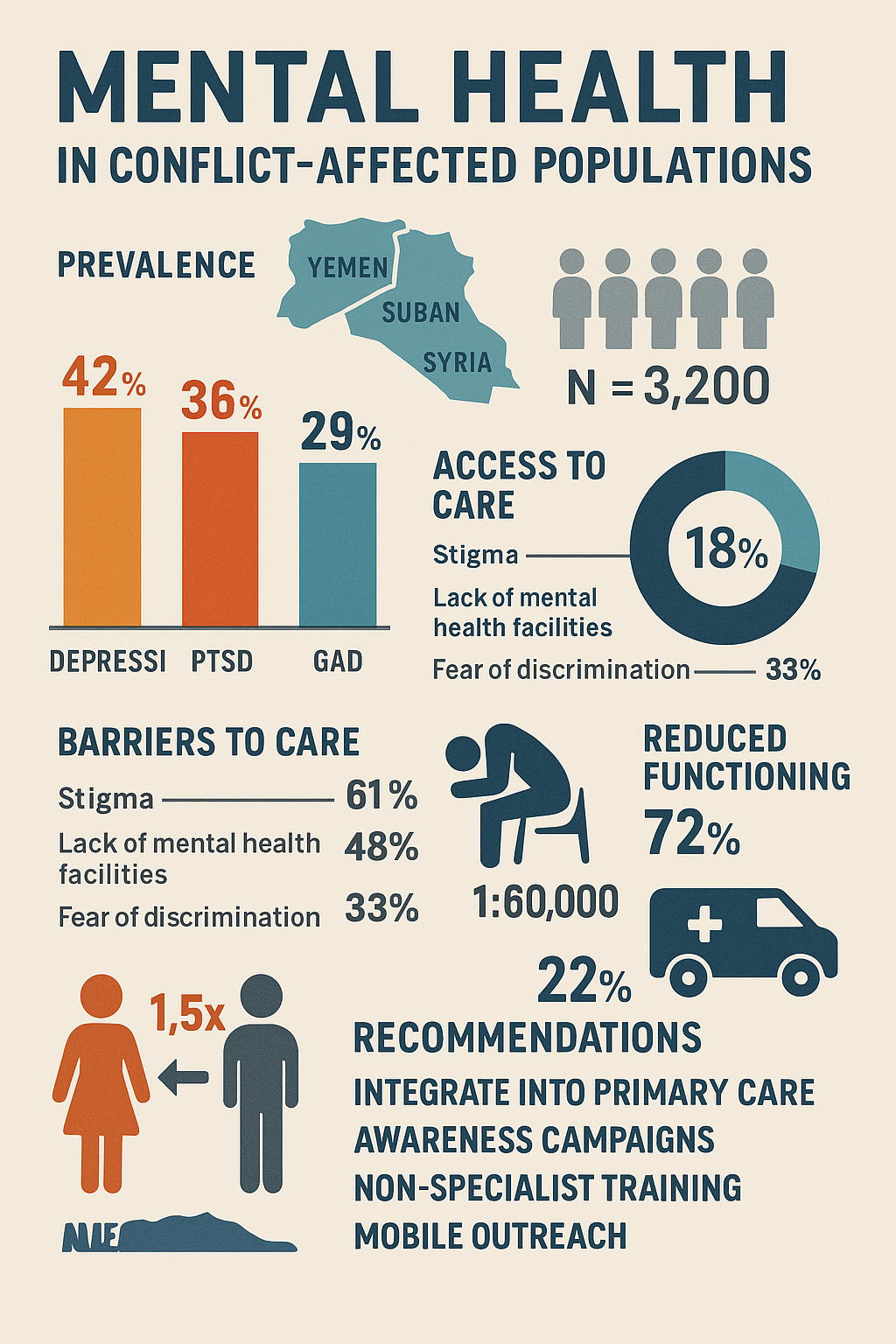
    • Psychological and mental health consequences of displacement and environmental adversity
    • Strategies to strengthen the adaptability and functionality of public health systems in crisis-prone regions
    • Data-driven interventions and health policy approaches aimed at reducing disease risk during emergencies

    We welcome original research articles, systematic reviews, case reports, and policy-focused papers that present novel insights and practical frameworks for managing health challenges in emergency contexts. Submissions from conflict-affected and resource-limited regions are particularly encouraged to foster inclusivity and global relevance in the public health dialogue.

    Core Areas of Interest Include (but are not limited to):
    • Transmission dynamics and outbreak patterns in internally displaced populations and refugee communities
    • Sanitation and hygiene practices within zones affected by conflict or disaster
    • Public health outcomes stemming from climate-induced environmental crises
    • Development and deployment of integrated disease monitoring and alert systems
    • Multisectoral coordination in emergency response and humanitarian health management
    • Application of One Health methodologies in fragile and emergency-affected settings


  • AR-PR
    Vol. 69 No. 4 (2025)

  • The New Finding In EMR Researches
    Vol. 264 No. 3 (2025)

    Environmental Health

    Issue Description:

    The increasing frequency and severity of humanitarian crises—including armed conflicts, forced displacement, climate-induced disasters, and disease outbreaks—pose significant challenges to global public health systems. These crises often lead to the collapse of essential infrastructure, displacement of populations, and disruption of water, sanitation, and hygiene (WASH) services, which collectively exacerbate the spread of infectious diseases and hinder disease surveillance and response efforts.

    This special issue aims to explore the intersection of public health epidemiology, environmental determinants, and human crises, with a particular focus on:

    • Disease burden and outbreak dynamics in displaced and vulnerable populations
    • Environmental health determinants such as unsafe water, poor sanitation, and air pollution
    • Epidemiological modeling and real-time surveillance in crisis settings
    • Mental health impacts of displacement and environmental stressors
    • Public health system resilience and preparedness in fragile settings
    • Evidence-based interventions and policies for mitigating health risks in humanitarian emergencies

    The issue invites original research, reviews, case studies, and policy analyses that highlight innovative approaches to understanding and managing public health threats in crisis-affected settings. Contributions from low-resource and conflict-affected regions are especially encouraged to promote equity and global representation in public health knowledge.

    Key themes include but are not limited to:

    • Outbreak epidemiology in refugee and IDP camps
    • Environmental hygiene in conflict zones
    • Health impacts of climate change-induced disasters
    • Integrated disease surveillance and early warning systems
    • Cross-sectoral responses to complex emergencies
    • One Health approaches during humanitarian crises


  • Latest Issue
    Vol. 4 No. 5 (2025)

  • New Findings in the East Mediterranean Region
    Vol. 4 No. 6 (2025)


    Issue Title: New Findings in the East Mediterranean Region

     Public Health

    This section presents recent research that sheds light on diverse aspects of public health in the East Mediterranean region. Topics include changing disease patterns, evaluations of health service delivery, and the impact of health policies on population outcomes. The featured studies reflect both proactive and evidence-based approaches to addressing current health challenges and optimizing preventive strategies in the region.

      Epidemiology

    This section highlights recent epidemiological investigations that explore disease outbreaks, risk factors, and the geographic and temporal distribution of both communicable and non-communicable diseases. For example, studies have revealed a decline in anemia prevalence among children in the region—from 40.6% in 2000 to 34.3% in 2019—underscoring the importance of data-driven interventions and surveillance efforts.

     Environmental & Occupational Health

    This section focuses on research examining the links between environmental exposures, occupational risks, and health outcomes. Topics include air pollution, climate change, extreme heat, and workplace hazards. Recent studies have shown how climate change poses significant health risks through increased temperatures, water scarcity, and degraded air quality. The included research also emphasizes risk assessment tools and predictive models aimed at protecting both workers and the general public.

      Why This Issue Matters

    This issue compiles a wide range of high-quality, data-driven studies that collectively define the current and emerging landscape of health in the East Mediterranean. These findings offer crucial insights for guiding policy, improving healthcare systems, and supporting regional collaborations aimed at strengthening evidence-based public health interventions.


  • New Findings in the East Mediterranean Region
    Vol. 5 No. 1 (2025)

    The special issue titled New Findings of the East Mediterranean Region is conceived as a focused scholarly platform that brings together original research, reviews, clinical observations, and short scientific contributions that reflect the most important health and medical developments across the region. Rather than presenting articles as isolated publications, the issue is intended to be distributed in a balanced and purposeful manner, with emphasis placed on original research as the central component, supported by selected review articles, brief reports, case-based contributions, and an editorial introduction that frames the scientific direction of the issue. This distribution allows the issue to appear coherent, curated, and academically mature, while also ensuring that a wide range of pressing regional themes such as public health, clinical medicine, maternal and child health, infectious diseases, health systems, and environmental health are meaningfully represented.

    The philosophy of this special issue is rooted in the belief that the East Mediterranean Region should not be viewed only as a setting of crisis, burden, or unmet need, but also as a source of scientific contribution, contextual intelligence, and research innovation. Health research emerging from this region carries a distinct value because it often addresses complex realities shaped by demographic transition, conflict, displacement, climate vulnerability, fragile health systems, and evolving disease patterns. At the same time, these realities generate unique forms of evidence that are highly relevant not only within the region but also to the wider global scientific community. The issue therefore adopts a philosophy that values regional knowledge as globally meaningful, encourages the visibility of underrepresented evidence, and positions local scholarship as an essential part of contemporary medical and public health discourse.

    Through this special issue, the journal affirms its commitment to advancing a more inclusive and intellectually grounded model of scientific publishing, one that recognizes the dignity, relevance, and originality of research conducted in the East Mediterranean Region. The aim is not simply to collect manuscripts from the region, but to curate a body of work that demonstrates methodological rigor, practical importance, and strategic insight for policy, practice, and future investigation. In this way, the issue serves both as a record of current findings and as a statement of academic identity, showing that the region is not only responding to health challenges but actively producing knowledge that can shape broader scientific understanding.