Pattern of Clinical Presentation of Sudanese SLE Patients with Positive Antiphospholipid Antibodies Attending the Rheumatology Clinic at Merowe Hospital, 2024
Ziryab Mahmoud¹, Weeam Mohammed Ahmad², Noha Ibrahim Ahmed Eltahir³, Tarig Alhadi Madibbo Ahmed⁴, Huda Mohamed Alfatih Awad Babiker⁵
Abstract
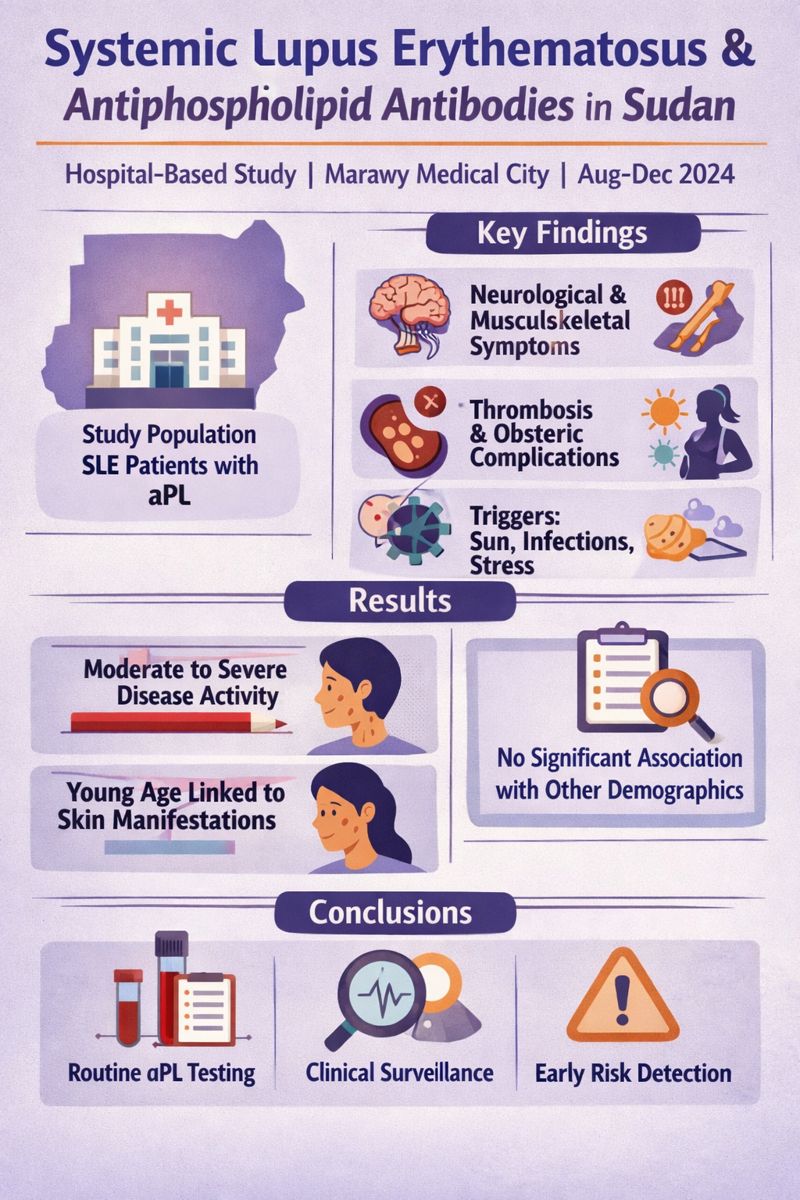
Systemic lupus erythematosus is a chronic autoimmune disease with multisystem involvement, and antiphospholipid antibodies are frequently associated with thrombotic and obstetric complications that may worsen disease course. This analytical cross-sectional hospital-based study was conducted at Marawy Medical City (north Sudan) during August to December 2024 to assess the pattern of clinical presentation among Sudanese systemic lupus erythematosus patients with antiphospholipid antibodies and to explore associations between demographic factors and clinical patterns. Data were collected using a structured pre-tested interviewer-administered questionnaire and analyzed using SPSS. The study included adult and adolescent systemic lupus erythematosus patients (including pregnant patients) who had at least one positive antiphospholipid antibody. The findings showed that neurological and musculoskeletal symptoms were frequently reported, moderate-to-severe symptom activity was common, and thrombotic and obstetric complications consistent with antiphospholipid syndrome occurred in a subset of patients. Sun exposure, infections, physical activity, and stress were commonly reported triggers. A statistically significant association was identified between younger age group and skin manifestations, while other demographic variables showed no significant associations with clinical pattern. These findings support the importance of routine antiphospholipid antibody assessment and structured clinical surveillance to improve risk stratification and early recognition of severe antiphospholipid-related complications in systemic lupus erythematosus.
Downloads